Executive Summary
Hidden plumbing leaks in San Diego often reveal themselves through indirect clues—billing spikes, meter movement, odors, moisture damage, and performance changes—long before visible dripping appears. The article emphasizes confirming suspected leaks with simple homeowner tests (especially the water meter), then isolating and escalating to professional detection quickly to reduce repair and restoration costs.
Key Takeaways
- Start with fast confirmation tests: A water meter “all-off” test and a toilet dye test are quick, non-invasive ways to verify whether water is flowing somewhere it shouldn’t.
- Watch for subtle indoor moisture indicators: Musty or “wet dog” odors, bubbling/peeling paint near baseboards, cabinet warping, ceiling stains, and spongy flooring often signal behind-wall or fixture-area leaks.
- Know the clue patterns by leak location: Warm floor spots and persistent running-water sounds point toward slab leaks, while localized wall dampness suggests behind-wall leaks and soggy yard patches indicate service-line or irrigation leaks.
- Act quickly because damage costs more than wasted water: Ongoing moisture can degrade drywall, wood, tile systems, and indoor air quality, making restoration expenses a major driver of total cost.
- Use isolation steps to narrow the source before calling a pro: Shutting off toilets, irrigation, and specific zones can help pinpoint the leak area and make professional detection (acoustic, thermal imaging, pressure testing, or video inspection) more efficient.
A hidden plumbing leak often shows up as higher water bills, musty odors, damp spots, or unexplained mold—even when you don’t see dripping water. In San Diego, these issues can sneak in fast because leaks behind walls, under slabs, or beneath landscaping don’t always make noise. Watch for hidden plumbing leak signs San Diego homeowners commonly report, like warm patches on a tile floor, paint that bubbles or peels near baseboards, or a “wet dog” smell in a bathroom that never quite goes away. You might also notice the water meter moving when all faucets are off, a sudden drop in water pressure, or soggy areas in the yard on a dry week.
What hidden plumbing leak signs San Diego homeowners should look for first
If you’re trying to catch a leak early, start with the signs that show up most often in real homes—before walls have to be opened or flooring gets ruined. These hidden plumbing leak signs San Diego residents commonly notice tend to cluster into four categories: billing/meter clues, indoor moisture clues, plumbing performance changes, and outdoor surprises.
Fast “yes/no” checks that often reveal a hidden leak
- Water meter test: Turn off every fixture and water-using appliance. If the meter’s leak indicator moves, you likely have a leak. (Many utilities and plumbers use this as a first pass because it’s quick and non-invasive.)
- Toilet dye test: Add a few drops of food coloring to the tank. If color appears in the bowl without flushing within 10–15 minutes, the flapper is leaking.
- Cabinet and vanity check: Run your hand along the bottom corners under sinks—small pinhole leaks often leave a tacky film or warped particle board.
- Shutoff isolation: If you have a main shutoff and fixture shutoffs, isolate zones to narrow where the leak may be (bath, kitchen, irrigation line, etc.).
Indoor clues that are easy to miss
Homeowners often overlook subtle indoor changes until damage becomes obvious. Keep an eye out for these hidden plumbing leak signs San Diego properties frequently develop:
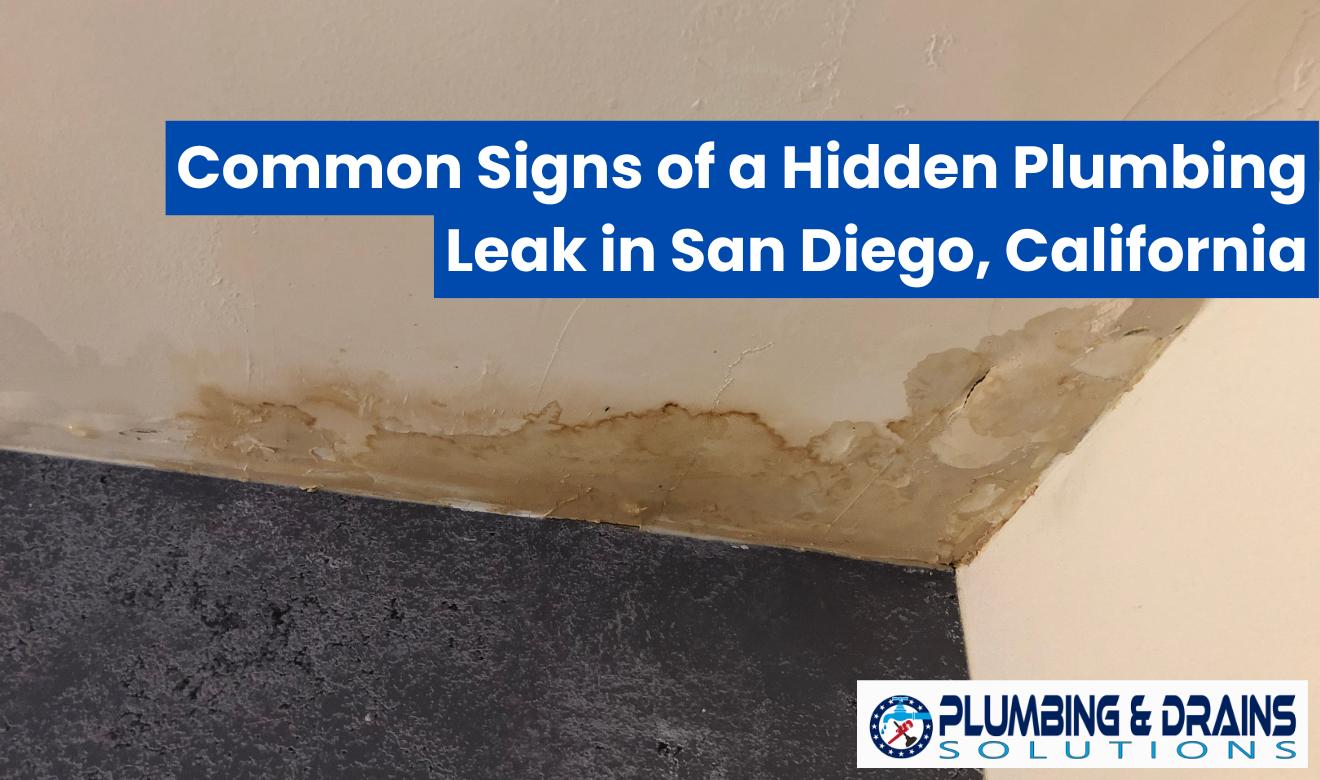
- Bubbling paint or peeling near baseboards (water wicks upward from drywall or behind trim).
- Musty or “wet dog” odor that returns after cleaning (persistent moisture feeding microbial growth).
- Warm spots on tile or slab (a common clue when hot water lines leak under a slab).
- Flooring that cups, buckles, or feels spongy—especially near bathrooms, laundry rooms, or kitchens.
- New stains on ceilings below an upstairs bath, especially after showers.
How to tell if a hidden leak is behind a wall, under a slab, or in the yard
Not all leaks behave the same. Locating the “type” of leak helps you decide how urgent it is and what kind of inspection makes sense. These hidden plumbing leak signs San Diego homeowners report can point you in a specific direction.
Signs of a leak behind a wall
- Paint bubbles, drywall seams swelling, or baseboards separating
- Localized musty smell in one room or closet
- A cold, damp wall surface (often on exterior walls after irrigation line issues)
- Mold appearing along the bottom 12 inches of drywall
Signs of a slab leak
- Warm or hot patch on the floor (hot water line leak)
- Sound of running water when everything is off
- Cracks forming in tile/grout or flooring that suddenly loosens
- Unexplained humidity indoors
- Water bill spike with no lifestyle change
Because slab leaks can escalate quickly, they’re one of the hidden plumbing leak signs San Diego homeowners should treat as urgent—especially if you also see foundation-adjacent moisture or rapid meter movement.
Signs of a yard or landscaping leak
- Green, fast-growing patch in one spot (even during a dry week)
- Soggy soil that doesn’t dry out
- Sunken areas or soil washout near hardscaping
- Drop in household water pressure (if the leak is on the main service line)
Why hidden plumbing leaks get expensive in San Diego homes
San Diego’s housing mix—slab foundations, aging supply lines in some neighborhoods, and irrigation-heavy landscaping—can make hidden leaks more destructive than homeowners expect. The biggest cost drivers are usually not the water itself, but the damage it causes to building materials.
What water damage does over time (even from a small leak)
- Drywall and insulation: Lose strength, trap moisture, and can support mold growth.
- Wood framing and subfloor: Can warp or rot when repeatedly wet.
- Tile and grout: Debonding can happen when moisture migrates under flooring.
- Indoor air quality: Persistent dampness can aggravate allergies and asthma triggers.
Real-world risk: leaks are common and often silent
According to the U.S. Environmental Protection Agency (EPA), household leaks can waste nearly 1 trillion gallons of water annually in the U.S., and an average household’s leaks can account for nearly 10,000 gallons of water wasted every year. That scale is why hidden plumbing leak signs San Diego residents notice—like a meter moving at “all-off”—should be taken seriously.
How to use your water meter to confirm hidden plumbing leak signs San Diego residents report
This is one of the best homeowner-level tests because it provides a clear, objective result.
Step-by-step water meter leak test
- Turn off all water: faucets, showers, hose bibbs, irrigation timers, dishwasher, washing machine, ice maker, and any recirculation systems if possible.
- Find your water meter (often near the curb in a meter box).
- Look for the small “leak indicator” (often a triangle or star-shaped dial).
- Watch it for 2–5 minutes. If it moves, water is flowing somewhere.
- For a more sensitive test, take a photo of the meter reading, wait 30–60 minutes with everything still off, and compare.
If the meter confirms flow, you’ve validated hidden plumbing leak signs San Diego homeowners often suspect but can’t see—like musty smells or warm flooring.
If the meter moves: quick isolation tips
- Shut off toilets one by one using the angle stop and repeat the meter check.
- Shut off irrigation supply if there’s a dedicated valve and test again.
- Check the water heater area for a dripping T&P discharge line or wet pan.
What hidden plumbing leak signs San Diego homeowners see with toilets, drains, and water heaters
Toilets: the most common “silent leak”
A toilet can leak from the tank to the bowl without making noise. If you’re tracking hidden plumbing leak signs San Diego homeowners report, toilet issues are at the top of the list.
- Periodic refilling (“phantom flush”)
- Water ripples in the bowl when no one used it
- Dye test confirms color in bowl
Drains: when a leak looks like a clog
A slow drain isn’t always a leak, but chronic backups can lead to overflows and hidden moisture. If you’re also smelling sewage or seeing dampness near cleanouts, it’s smart to address the drainage side early. For stubborn buildup and recurring slow drains, consider professional Drain Cleaning before a minor issue turns into water damage.
Water heaters: small releases that cause big damage
- Moisture around the base of the unit
- Rusty water, popping sounds, or a damp pan
- Intermittent puddles that dry up (slow seepage)
Cost: what it typically costs to diagnose and repair a hidden plumbing leak
Costs vary widely because the main variables are access (how hard it is to reach the pipe) and restoration (drywall, flooring, cabinets). Diagnosis is often the cheapest part; repairs and rebuilding are where budgets expand.
Typical cost ranges (what drives them)
- Leak detection/diagnosis: Typically depends on time, tools used (acoustic, thermal imaging), and how many areas must be tested.
- Simple fixture leak repair: Often lower cost if shutoffs and access are straightforward.
- Behind-wall supply leak: Usually includes opening and patching a wall area.
- Slab leak repair: Can involve rerouting lines, spot repair, or re-pipe strategies.
- Water damage restoration: Drying, dehumidification, and material replacement can exceed the plumbing repair cost.
If you want a pricing benchmark for clogs and buildup (which can contribute to overflows and water damage), this drain cleaning pricing guide helps explain what affects service cost.
| Hidden leak scenario | Most common warning signs | What usually increases total cost |
|---|---|---|
| Toilet tank-to-bowl leak | Phantom refills, dye test positive, higher bill | Multiple toilets, worn shutoffs, neglected parts causing overflow |
| Behind-wall supply leak | Bubbling paint, musty odor, damp baseboards | Tile/stone finishes, cabinet removal, drying time and mold remediation |
| Slab leak (hot or cold line) | Warm floor spots, meter movement, sound of running water | Flooring removal, reroute complexity, access through concrete |
| Yard/service line leak | Soggy yard, pressure drop, unexplained bill spike | Hardscape excavation, permitting needs, long pipe runs |
How to prevent hidden plumbing leaks (and catch them early)
The best strategy is a mix of routine checks and smart upgrades. Because hidden plumbing leak signs San Diego homeowners see often start small, early detection can prevent major restoration.
Monthly and seasonal prevention checklist
- Do a 5-minute meter check monthly (especially if your bill fluctuates).
- Inspect under sinks for dampness, corrosion, or pinhole spray marks.
- Replace toilet flappers when they stiffen or warp.
- Clean shower and tub drains to prevent backups and overflows.
- Check irrigation for unexplained wet zones and broken heads.
- Know your shutoffs (main shutoff and fixture shutoffs) and label them.
Upgrades that reduce risk
- Pressure regulation: Excessive water pressure can stress supply lines and fixtures over time.
- Water leak alarms: Battery sensors under sinks, behind toilets, and near water heaters can alert you early.
- Smart shutoff valves: Can detect abnormal flow patterns and automatically shut water off in some systems.
When hidden plumbing leak signs San Diego homeowners see mean “act now”
Some symptoms suggest active, damaging leakage. Don’t wait on these:
- Meter spins with all water off and you can’t isolate it to a fixture
- Ceiling staining or sagging (risk of collapse and electrical hazards)
- Warm floor spot that grows day by day
- Sewage smell with dampness near drains or cleanouts
- Visible mold growth that returns after cleaning
If you’re dealing with an urgent situation—especially active flooding or a major supply line failure—use a true 24/7 emergency plumbing option so water can be shut down and damage minimized quickly.
What to expect from a professional leak investigation
Once hidden plumbing leak signs San Diego homeowners recognize are confirmed (by the meter or visible damage), a professional process usually aims to locate the leak precisely while minimizing unnecessary demolition.
Common professional tools and methods
- Acoustic listening equipment: Helps pinpoint pressurized line leaks behind walls or under slabs.
- Thermal imaging: Can reveal temperature differences from hot-water leaks or moisture patterns.
- Pressure testing: Confirms whether a line holds pressure or is losing it over time.
- Video inspection (for sewer/drain issues): Locates breaks, root intrusion, offsets, and bellies that can lead to wet areas and odors.
A brief real-world example (based on common field outcomes)
A typical scenario: a homeowner notices hidden plumbing leak signs San Diego residents often describe—musty smell in a hallway bathroom plus a small warm area on tile. The meter test shows movement with everything off. A targeted inspection identifies a hot-water line leak under the slab near the bathroom wall. By pinpointing the location, repair crews can avoid tearing out multiple rooms and focus on the specific access point, then dry the area to prevent microbial growth.
Why plumbing systems fail: the short, factual explanation
Leaks aren’t random—they happen when materials, pressure, and time collide. Plumbing systems are designed to be durable, but joints, seals, and pipes can degrade. If you want the plain-language overview of how plumbing systems work and why components fail, this reference on plumbing provides a helpful foundation.
Top causes of hidden leaks
- Aging supply lines and worn fittings
- High or fluctuating water pressure
- Corrosion (water chemistry and pipe material both matter)
- Movement (settling, vibration, thermal expansion)
- Poor previous repairs or incompatible materials
“Find It Fast, Fix It Right”: the trust factors that matter
When hidden plumbing leak signs San Diego homeowners see start piling up, the best results come from a methodical approach: confirm flow (meter), isolate the zone, locate precisely, repair to code, then dry and restore materials properly.
For peace of mind, look for professionals who can demonstrate:
- State-appropriate licensing and code knowledge for water, sewer, and gas work
- Documented diagnostic process (meter verification, pressure testing, or inspection reports)
- Experience with slab foundations and reroute/repair strategies common in Southern California
- Clear scope and repair options that explain access points, restoration expectations, and prevention steps
Most importantly, don’t ignore repeating hidden plumbing leak signs San Diego homeowners commonly report—higher bills, musty odors, bubbling paint, warm floor spots, or a meter that won’t sit still. Catching a leak early is usually the difference between a straightforward repair and a major rebuild.
Frequently Asked Questions
Stop the Leak Before It Starts Costing You Real Money
Not sure if those hidden plumbing leak signs San Diego homeowners deal with are happening in your home? If your water bill is creeping up, you’re catching musty odors, or your meter won’t sit still, it’s time to get answers before the damage spreads. Drains Plumbing can help you pinpoint what’s going on fast—so you can fix the source, protect your home, and get back to normal.