Executive Summary
Same day tankless water heater installation San Diego is achievable when utility capacity (gas or electric), venting, clearances, and—if condensing—condensate drainage can be verified and built to code in one visit. The definitive standard for “done” is commissioning: leak-free connections, correct venting/condensate handling, safe temperature settings, and stable hot water at multiple fixtures before the installer leaves.
Core Insights
- Same-Day Is a Workflow, Not a Rush: A proper same-day replacement follows a repeatable sequence—capacity checks, code-compliant install, and documented commissioning—so speed never replaces safety.
- Utilities and Venting Decide Feasibility: Gas line sizing or electrical panel capacity, along with a listed venting route that meets clearance rules, are the most common pass/fail items for completing the job in hours.
- Condensate, Pressure, and Service Access Protect Reliability: Condensing drain routing, incoming water pressure control, and accessible isolation/flush valves are the details that prevent lockouts, scale damage, and costly callbacks.
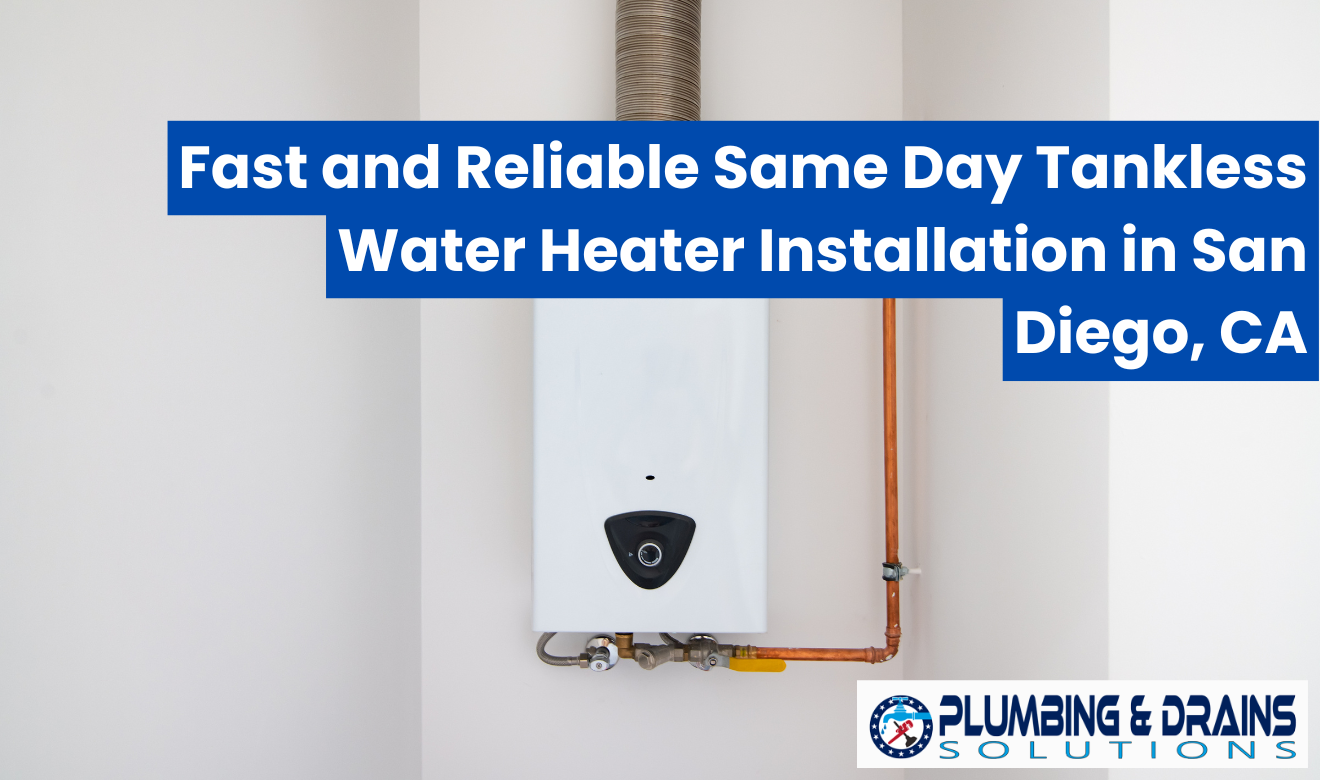
Same day tankless water heater installation San Diego is a local plumbing service that replaces a failed or outdated water heater with an on-demand unit and restores hot water within hours. Technicians confirm gas or electric capacity first. They measure incoming water pressure, check hard-water scale risk, and verify venting paths in attics, side yards, or roof penetrations common in San Diego homes. A same-day job often includes shutting off the gas at the meter, draining and removing the old tank, and mounting the new unit on a reinforced wall surface in a garage, exterior alcove, or utility closet. Gas installs typically require a correctly sized gas line, a sediment trap, a shutoff valve, and a pressure test before relighting. Venting is matched to site conditions, such as direct-vent through an exterior wall or vertical venting through the roof, with clearances to windows and eaves verified to meet local code. Condensing units usually need a condensate drain routed to an approved receptor with a neutralizer if required. Installers also add service valves for flushing, set outlet temperature for safe domestic use, and confirm stable hot-water delivery at multiple fixtures, such as a shower, kitchen sink, and laundry hook-ups in the same visit.
What “Same-Day” Really Means for a Tankless Replacement in San Diego
Same-day tankless replacement is a defined, repeatable workflow: diagnose the failure, confirm utility capacity, install the appliance to code, and commission the system before leaving. In San Diego, the speed comes from arriving with the correct venting parts, valves, and gas/water fittings for common local home layouts (garage installs, exterior alcoves, roof vent runs).
A same-day job is most realistic when:
- The existing unit is accessible and shutoffs function properly.
- The gas meter and branch line can support the new BTU load (or electric panel supports the amperage for electric tankless).
- Venting can be run using listed materials with required clearances (sidewall direct-vent or vertical roof termination).
- A condensate drain path is available for condensing appliances.
If any of the above conditions fail, a reputable installer still completes safe shut-down and stabilization the same day, then schedules the required upgrade work (for example, gas line upsizing or electrical service changes) rather than forcing an unsafe “quick” install.
Pre-Install Site Verification (Utilities, Water Conditions, and Location)
Before removing the old heater, technicians verify the home can safely support an on-demand system and that the mounting location meets code requirements. This reduces call-backs and prevents nuisance lockouts caused by undersized gas lines, improper venting, or high scale potential.
Core checks commonly performed in San Diego homes include:
- Fuel type and capacity
- Gas: confirm meter capacity, existing pipe diameter, developed length, and total connected load before selecting BTU input.
- Electric: confirm service size, available breaker spaces, conductor sizing, and required amperage per manufacturer instructions.
- Incoming water pressure
- Measured at a hose bib or laundry connection using a gauge.
- High pressure may require service or replacement of a water pressure regulator to protect the heat exchanger and fixtures.
- Hard-water scale risk
- Local water hardness can accelerate scale; installers plan for flush/service valves and discuss a descaling schedule consistent with manufacturer requirements.
- Venting path and terminations
- Direct-vent sidewall terminations must be located with required clearances from openings and building elements as stated in the appliance listing and the California Mechanical Code (Title 24, Part 4).
- Vertical venting through the roof must maintain required clearances, support, and proper flashing.
- Combustion air and placement
- For indoor gas units, confirm combustion air provisions per the California Mechanical Code and the appliance installation manual.
- For garage or exterior mounting, confirm protection from physical damage and weathering per listing and local amendments.
These checks align with the broader scope of plumbing work, where safe water delivery, fuel gas safety, and code-compliant venting are treated as one integrated system.
Permits and Inspections: What Typically Applies in San Diego
Most water heater replacements require a permit and an inspection when fuel gas, venting, or piping is modified. Same-day service can still proceed by following code, documenting the installation, and coordinating the inspection per the local Authority Having Jurisdiction (AHJ).
Key regulatory frameworks used in San Diego include:
- California Plumbing Code (Title 24, Part 5) for water piping, T&P relief discharge concepts (as applicable), seismic considerations for tanks (less applicable for wall-mounted tankless), and general plumbing standards.
- California Mechanical Code (Title 24, Part 4) for venting, combustion air, and appliance installation clearances.
- California Fuel Gas Code (Title 24, Part 6) for gas pipe sizing, sediment traps (drip legs), shutoff valves, and pressure testing practices where piping is altered.
- California Electrical Code (Title 24, Part 3) for any electrical modifications, disconnects, and conductor overcurrent protection.
Installers should also follow the manufacturer’s installation manual because it is enforceable as part of the appliance’s listing and labeling. When a manual calls for a specific vent material, maximum vent length, or condensate handling method, that requirement is not optional.
Same-Day Installation Workflow (From Shutoffs to Commissioning)
A standard same-day replacement follows a consistent sequence: isolate utilities, remove the old unit, set the new appliance, connect water/gas/venting, then test and commission. This order prevents gas leaks, water damage, and ignition problems.
- Safety shutdown and isolation
- Shut off water supply and open fixtures to relieve pressure.
- Shut off gas at the appliance valve and, when necessary, at the meter for safe piping work.
- Verify electrical disconnects where applicable.
- Drain and remove existing tank heater
- Drain using a hose to an appropriate location.
- Disconnect vent connector, water lines, and gas line.
- Remove the tank without damaging surrounding finishes.
- Mount the tankless unit
- Install bracketry per manufacturer instructions.
- Mount to suitable framing or reinforced wall surface in a garage, utility closet, or exterior alcove.
- Water piping and service valves
- Install isolation/service valves to enable future flushing.
- Connect cold and hot lines; ensure proper pipe support and strain relief at the appliance.
- Check for crossover and verify hot-side distribution integrity.
- Gas piping (for gas tankless)
- Confirm pipe sizing based on total BTU load and developed length.
- Install a listed shutoff valve and a sediment trap where required by code and the appliance manual.
- Pressure test gas piping when modifications are made, then leak-test all joints after placing in service.
- Venting and terminations
- Use only listed vent materials approved by the appliance manufacturer.
- Maintain required clearances to windows, doors, eaves, and property lines per listing and California Mechanical Code provisions.
- Verify slope and condensate management where applicable.
- Condensate handling (condensing units)
- Route condensate to an approved receptor as allowed by local code and site conditions.
- Install a neutralizer if required by the manufacturer or specified by local practice for protecting piping and drains.
- Commissioning and verification
- Purge air from gas line and verify stable ignition.
- Set outlet temperature for domestic safety and confirm anti-scald performance at fixtures.
- Test flow at multiple points (shower, kitchen, laundry) to confirm stable delivery and no error codes.
Local Installation Variables That Affect Timing and Cost
In San Diego, the biggest drivers are vent routing complexity, gas line sizing changes, and condensate drain access. A same-day install is fastest when the new unit can reuse an appropriate vent route and when gas or electrical capacity already matches the heater’s demand.
Common site-specific variables include:
- Attic and roof penetrations (vertical venting often requires roof flashing, attic supports, and strict termination placement).
- Side-yard clearances (direct-vent terminations must meet clearance rules from openings and building features).
- Older gas branch lines (may be too small for modern high-BTU burners, requiring resizing).
- Outdoor coastal exposure (corrosion-resistant mounting practices and proper weather protection matter near marine air).
- Water pressure fluctuations (high or unstable pressure can cause nuisance issues and should be corrected at the regulator when needed).
If the home also has slow drains or backups that could complicate shutoffs and commissioning, addressing drainage first prevents interruptions during a heater swap; the drain cleaning pricing guide helps set realistic expectations for that separate but commonly related service call.
Technical Specs and Code Anchors (Quick Reference Table)
This table consolidates the installation checkpoints that most often determine whether a same-day tankless replacement will pass inspection. It focuses on measurable requirements tied to manufacturer listing, California codes, and common San Diego housing conditions.
| Feature / Metric | Specifications | Local Guidelines |
|---|---|---|
| Gas line capacity verification | Size piping based on total connected BTU load and developed length; follow California Fuel Gas Code sizing methods and manufacturer input requirements. | If resizing is needed, include a pressure test for modified sections and document regulator/meter capacity where applicable. |
| Venting system compatibility | Use only listed vent materials and configurations in the installation manual; observe maximum equivalent vent length and approved terminations. | Clearances to windows, doors, eaves, and other openings must match the appliance listing and California Mechanical Code requirements. |
| Condensate management (condensing units) | Provide a trapped drain route to an approved receptor; add a neutralizer when required by manufacturer or local practice. | Plan routing in garages/exterior alcoves so discharge does not create a slip hazard or damage finishes; protect tubing from UV exposure outdoors. |
| Water pressure and protection | Measure static pressure; correct excessive pressure with a functioning regulator; install isolation/service valves for maintenance flushing. | Pressure regulation is especially important in neighborhoods with higher municipal pressure; confirm stable fixture performance during commissioning. |
| Commissioning verification | Leak-check water and gas connections; verify ignition stability; set outlet temperature; confirm performance at multiple fixtures. | Document error-free operation and provide basic maintenance instructions (flush interval, inlet screen cleaning, and shutdown procedure). |
Post-Install Setup: Temperature, Maintenance Access, and Long-Term Reliability
Commissioning is not complete until the heater is configured for safe domestic hot water and future service is straightforward. This includes temperature control, flush-valve access, and owner guidance consistent with manufacturer requirements.
Key finishing steps that directly affect performance:
- Outlet temperature setpoint
- Set to a safe domestic temperature appropriate for household use and compatible with any thermostatic mixing devices in the home.
- Confirm stable temperature under typical simultaneous draws (for example, shower plus kitchen faucet).
- Serviceability
- Isolation/service valves installed and accessible for descaling.
- Cleanable inlet screen location explained to the occupant.
- Venting and condensate lines secured and supported to prevent vibration and separation.
- Scale prevention plan
- Flush intervals should follow the manufacturer manual and local water conditions.
- If the home has frequent fixture aerator clogging or known mineral buildup, discuss water treatment options that are compatible with tankless operation.
When Same-Day Service Becomes an Emergency (And What to Do First)
Loss of hot water can be urgent, but gas odors, active leaks, or venting failures are true safety emergencies. The correct first steps are to secure the site, stop the hazard, and then proceed with repair or replacement.
Use these immediate actions when conditions are unsafe:
- If you smell gas: shut off the gas if it is safe to do so, ventilate the area, avoid operating electrical switches, and contact qualified emergency help.
- If there is active water leakage: shut off the water supply to the heater or the home and protect nearby electrical outlets and appliances.
- If the vent is disconnected or damaged: stop using the appliance and arrange for same-day correction to prevent combustion byproduct spillage.
For urgent after-hours situations, 24/7 emergency plumbing support is the appropriate pathway when a hazard exists or the home cannot safely operate without immediate intervention.
Hot Water Restored—Correctly: The San Diego Same-Day Standard
A proper same-day tankless installation is defined by code compliance, verified capacity, and documented commissioning—not just speed. When gas sizing, venting, condensate routing, and water pressure are handled to California code and manufacturer listing, the system delivers stable hot water the same day and remains serviceable for the long term.
The practical benchmark for a successful install is clear and testable:
- Gas and water connections are leak-free and verified.
- Venting matches the appliance listing and maintains required clearances.
- Condensate is routed correctly (condensing units) without causing damage or hazards.
- Service valves are installed for flushing, and the owner knows how maintenance is performed.
- Multiple fixtures run with stable temperature and no fault codes at the end of the visit.
When these items are completed in one visit, a failed tank can be replaced by an on-demand unit within hours while still meeting inspection standards typical for San Diego installations.
Frequently Asked Questions
Get Hot Water Back Today—Without Failing Inspection or Creating a Safety Hazard
When a water heater dies, it’s tempting to “just swap it” and hope for the best. But a tankless replacement in San Diego isn’t a simple appliance change—it’s a fuel, venting, water-pressure, and drainage project that has to work together or it can shut down, leak, or become unsafe.
Here’s what can go wrong when it’s handled without an experienced local pro:
- Undersized gas lines can cause ignition failures, error codes, poor performance at multiple fixtures, and can trigger failed inspections when load calculations don’t pencil out.
- Incorrect venting or clearance mistakes can lead to dangerous exhaust issues, moisture damage, and a system that won’t pass under California Mechanical Code requirements.
- Skipped pressure testing and leak checks can leave hidden gas leaks or water seepage that turns into costly damage after the installer is gone.
- Improper condensate routing (for condensing units) can create corrosion, drain problems, slip hazards, and premature equipment issues.
- No service valves or poor maintenance access sets you up for expensive future service calls and faster scale buildup—especially with local hard-water conditions.
Same-day should mean done right: capacity verified first, installed to manufacturer listing, venting and condensate handled correctly, and commissioning completed with stable hot water at the shower, kitchen, and laundry before the job is called finished.
If you want hot water restored fast—without shortcuts that can cost you later—get a local team that shows up prepared, installs to code, and tests everything before they leave.