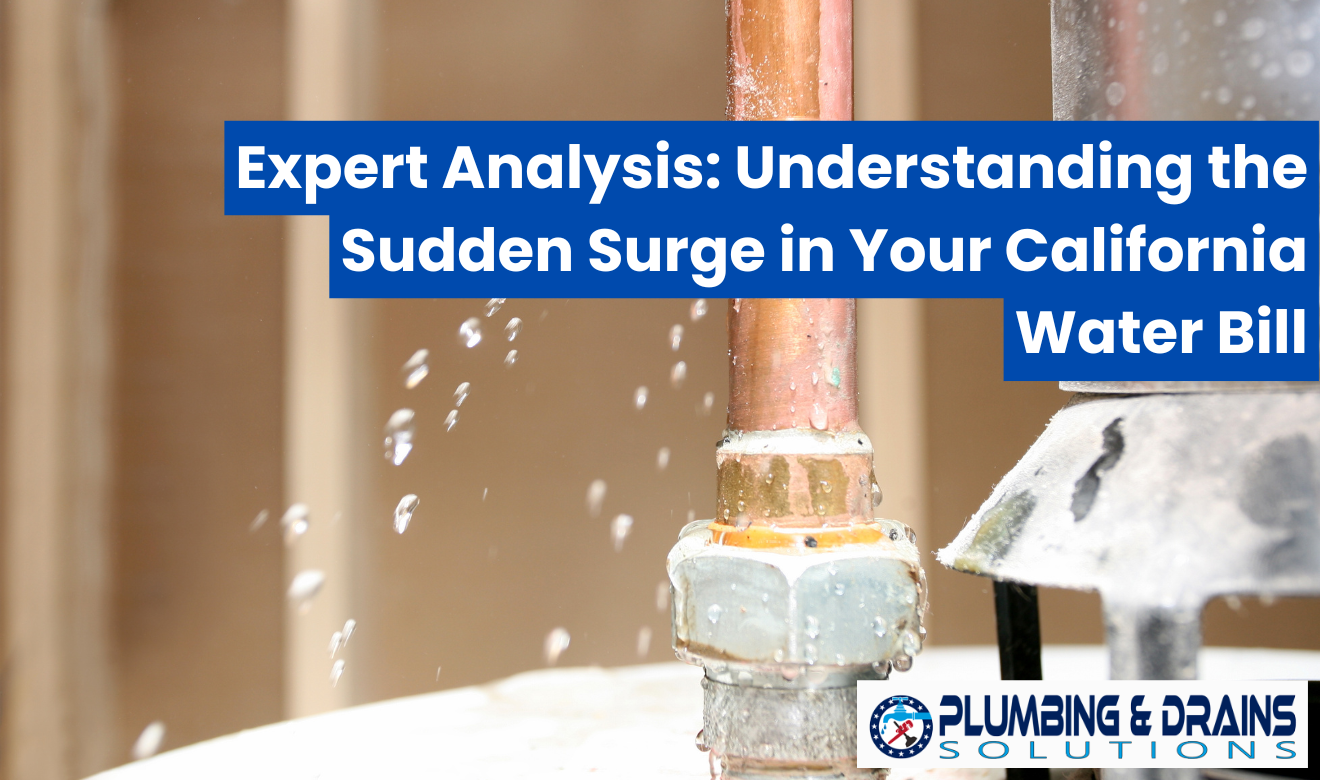
A sudden high California water bill is usually caused by either a hidden continuous leak (most often toilets, irrigation valves, or under-slab/supply leaks) or a billing/rate artifact (estimated read, longer cycle, or tier/seasonal price changes). Verify the bill details first, then confirm or rule out a leak with a 10–15 minute meter test when all water is off.
- Verify the Bill First: Check whether the read was actual vs. estimated, the billing period length, the units (HCF/CCF), and whether tiered or drought rates changed, because these can inflate totals without a big routine change.
- Use the Meter to Prove Flow: If the low-flow indicator moves (or the meter read changes) with every fixture and irrigation shut off, you have real consumption—typically a silent toilet leak, irrigation seepage, or a hidden supply/slab leak.
- Prioritize High-Probability Fixes and Documentation: Start with toilet dye tests and a night irrigation audit, then escalate quickly for slab/service-line or pressure/TPR issues, while saving photos and invoices for potential utility leak-adjustment programs.
“Why is my water bill suddenly so high” usually means your household water use spiked, your meter recorded more flow than normal, or billing/seasonal rate factors changed in your California service area. A hidden leak is the most common cause in many CA cities, especially slab leaks in older homes, silent toilet flapper failures that can run all day, or irrigation valve leaks that only happen at night. A single stuck toilet flapper can waste thousands of gallons in a month, and a pinhole leak in a hot-water line can run constantly without visible pooling. Outdoor demand also jumps fast during warm inland stretches in places like the Central Valley or the Inland Empire, where sprinkler schedules often increase, evapotranspiration rises, and overspray hits sidewalks and drains. Local water districts may apply tiered pricing, drought surcharges, or seasonal allocations, so crossing into a higher usage tier can raise the bill sharply even if the gallons only increase moderately. Billing details matter too, including estimated reads versus actual reads, longer billing cycles, a missed prior read that “catches up” later, or a new household usage pattern such as filling a pool, pressure-washing, adding a drip zone, or hosting guests for several weeks.
Start With Verification: Is the High Bill Real or a Billing Artifact?
A sudden increase can come from true higher consumption or from how the bill was calculated. Confirm the read type, service period length, and whether rates or tiers changed before you start repairs.
Use this quick verification checklist on your latest California water bill (most districts list these fields on the statement or in the online portal):
- Read type: “Actual” vs. “Estimated.” An estimated read can be corrected later, creating a “catch-up” bill.
- Billing cycle length: 28–35 days is common; a longer cycle increases total gallons even if daily use stayed constant.
- Units used: Many CA agencies bill in HCF (hundred cubic feet) or CCF; 1 HCF = 748 gallons.
- Tiered rates / drought budgets: A modest usage increase can trigger a higher tier price.
- One-time charges: Back-billing, deposit adjustments, or service fees can appear as separate line items.
If your bill shows an “estimated” read or an unusually long service period, compare the meter read printed on the bill to the number currently visible at your meter box. If the numbers are close, the charge likely reflects real consumption rather than a billing error.
Do a 10-Minute Meter Test to Confirm a Leak
The fastest way to prove unexpected usage is to test the water meter when no fixtures are running. Most California meters have a low-flow indicator that spins or pulses with even tiny leaks.
Follow this procedure exactly to avoid false positives:
- Turn off all water-using devices inside and outside: faucets, showers, laundry, dishwasher, ice maker fill, irrigation controller (set to “off”), and any hose bib timers.
- Locate the meter (usually in a box near the curb/sidewalk). Lift the lid carefully and clear dirt from the dial.
- Watch the leak indicator:
- On many meters it’s a small triangle/star wheel. If it moves with all water off, water is flowing.
- Digital endpoints may show a flow icon or a “+” indicating usage.
- Take two readings 10–15 minutes apart without using water. Any change indicates consumption.
Interpretation: If the leak indicator moves steadily, you likely have a continuous leak (toilet flapper, irrigation valve, recirculation line, or slab leak). If it only moves intermittently, suspect devices that cycle automatically (water softener regeneration, ice maker, evaporative cooler makeup, or a pressure relief discharge at a water heater).
Most Common Indoor Causes: Toilets, Water Heaters, and Hidden Supply Leaks
Indoor leaks often produce no visible puddles yet create large monthly overages. Toilets are the leading culprit because a failing flapper or fill valve can run silently for hours.
Toilet Flapper or Fill Valve Failure
A running toilet can waste thousands of gallons per month and is frequently silent. The failure point is usually the rubber flapper, chain length, or the fill valve not shutting off at the correct waterline.
- Dye test: Add dye tablets or a few drops of food coloring to the tank; wait 10–15 minutes without flushing. If color appears in the bowl, the flapper is leaking.
- Listen and inspect: Intermittent refilling (“ghost flushing”) indicates slow tank-to-bowl leakage.
- Corrective action: Replace flapper and consider a complete fill valve rebuild if the toilet is older or parts are corroded.
If the toilet keeps running and you need immediate help, a dedicated toilets service visit is typically the most direct way to stop the bleed and document the repair for your utility if your district offers leak adjustment forms.
Water Heater and Temperature/Pressure Relief (TPR) Discharge
A water heater can waste water through a discharge line without obvious indoor signs. Continuous dripping from the TPR valve or thermal expansion issues can drive unexpected usage.
- Check the discharge pipe: It should terminate to an approved location and should not be dripping continuously.
- Thermal expansion control: Many California installations require proper expansion management; if expansion is uncontrolled, the TPR may weep.
- Action: Have a licensed plumber evaluate the TPR valve, incoming pressure, and whether an expansion tank is required for your configuration.
Slab Leaks and Under-Slab Hot Water Line Pinhole Leaks
Slab leaks are common in older California homes and can run continuously without surface pooling. Warm spots on flooring, hot water running out of the ground, or unusually fast hot-water meter movement are key indicators.
- Common signs: Warm tile areas, unexplained mildew odor, cracks, sudden drop in water pressure, or a constantly running meter indicator.
- Isolation test: Shut off the house main, then check if the meter still moves (it should not). If it moves with the house valve off, the issue may be between meter and house (service line leak) and is often the homeowner’s responsibility depending on local rules.
- Next step: If suspected, schedule professional acoustic/thermal leak location to minimize destructive access.
For deeper context on repair options and what repiping can involve in Southern California housing stock, see slab re-piping.
Outdoor Spikes: Irrigation, Valves, and Seasonal Demand Patterns
Outdoor use is the largest driver of sudden bill jumps in many California service territories, especially during hotter weeks. A single stuck valve or broken sprinkler line can run at night and remain unnoticed.
Focus your inspection on these high-probability issues:
- Stuck irrigation valve: Zone runs after the controller says “off,” often caused by debris or diaphragm failure.
- Broken lateral line or head: Look for soggy areas, fungus rings, or water bubbling at a head when the zone is off.
- Drip system emitter blowouts: Drip tubing splits or end caps pop off, especially after heat cycles.
- Overspray and runoff: Spraying sidewalks/driveways sends paid water directly to storm drains.
- Controller changes: Seasonal “smart” controllers can increase runtimes based on weather inputs; verify settings after heatwaves.
Night audit method: Run each zone for 2–3 minutes after dark and walk the property with a flashlight. Leaks are easier to see, wind is lower, and evaporation doesn’t mask pooling.
Water Pressure and the Link to Leaks
High static pressure increases leak risk and can convert small weaknesses into continuous losses. California plumbing practice commonly targets safe residential pressure, and many homes use a pressure-reducing valve (PRV) to control it.
Steps to check pressure safely:
- Attach a pressure gauge to a hose bib (spigot) closest to where water enters the home.
- Measure static pressure with all fixtures off.
- If pressure is high or fluctuates sharply, have a PRV and expansion control evaluated by a plumber.
If you suspect pressure problems are contributing to repeated fixture failures or pinhole leaks, consider an inspection of water pressure regulators.
Billing Rules and Local California Procedures That Affect Totals
Many California water suppliers use tiered rates, conservation pricing, or drought-related allocations, so the cost per unit can jump mid-bill. Your household may pay significantly more even if total gallons rose only modestly.
Key billing mechanics to review in your district’s published rate schedule:
- Tier thresholds: Rates increase above defined usage blocks; crossing a threshold can change the blended cost of the entire bill.
- Fixed charges vs. volumetric charges: A fixed service fee stays constant; the variable portion tracks consumption.
- Budget-based billing: Some agencies allocate water budgets using irrigable area and household size; exceeding budget triggers higher charges.
- Estimated read corrections: A later “actual” read can reconcile prior estimates.
When you call your utility, ask for: (1) the read type for the last two bills, (2) the exact start/end meter reads, (3) the tier thresholds applied, and (4) whether a leak adjustment program exists and what documentation is required (invoice, photos, repair date).
Diagnostic Snapshot Table: What to Check First and What It Usually Means
This table consolidates the highest-value checks into a single decision tool. Use it to match a symptom (meter movement, wet spots, toilet behavior) to the most likely cause and the standard next step.
| Feature / Metric | Specifications | Local Guidelines |
|---|---|---|
| Meter low-flow indicator with all water off | Any continuous movement indicates a leak downstream of the meter | Document date/time and take a photo; many CA utilities accept this for leak adjustment requests |
| Toilet dye test result | Color in bowl (without flushing) confirms tank-to-bowl leak | Replace flapper/fill valve; keep receipts/invoice for potential billing relief programs |
| Irrigation system behavior at night | Wet zones when controller is off suggests valve seepage or line break | Many municipalities enforce runoff limits; adjust spray patterns and repair leaks promptly to avoid waste |
| Warm spot on slab / unexplained hot water demand | Often indicates hot-side slab leak or recirculation line issue | Schedule professional leak detection to limit demolition; confirm shutoff responsibility between meter and house |
| Water heater discharge line dripping | Persistent drip can indicate TPR valve activation or expansion/pressure issue | Do not cap or plug discharge; have TPR/pressure controls evaluated for safety compliance |
When to Escalate: Signs You Need Immediate Professional Help
Some high-bill causes also create property damage or safety risks and should not wait. Continuous flow, suspected slab leaks, or sewer-related backups can quickly escalate repair costs.
Contact a licensed plumber promptly if you observe:
- Meter spinning fast even when all fixtures are off and the leak indicator is moving continuously.
- Water damage signs: swelling baseboards, bubbling paint, musty odor, or persistent wet flooring.
- Foundation or slab indicators: warm floors, cracks widening, or audible water movement in walls.
- Repeated clogs/backups that coincide with unusual water use patterns (misrouted drains or hidden leaks can co-exist).
If you need after-hours support because the meter won’t stop or a leak is actively damaging the home, use 24/7 emergency plumbing resources to stabilize the situation and limit water loss.
How Repairs and Documentation Help With Utility Leak Adjustments
Many water suppliers offer a one-time or limited leak adjustment when you prove a leak was repaired. The process is administrative and depends on clear documentation and dates.
Prepare a leak adjustment packet with:
- Invoice or work order showing what was repaired (toilet rebuild, service line repair, slab leak fix) and the repair date
- Before/after meter photos showing reduced or stopped flow
- Notes from your troubleshooting (dye test result, irrigation audit observations)
- A copy of the high bill and the prior bill(s) for baseline comparison
If the issue involves core piping or system components, repairs typically fall under standard plumbing scope and should be performed to code by qualified professionals to avoid repeat failures and to preserve eligibility for adjustments where utilities require licensed documentation.
Get Control of the Next Bill: A Practical 30-Day Prevention Plan
Once the immediate spike is resolved, a short prevention plan reduces the chance of another surprise. The goal is to catch silent leaks early and keep outdoor use aligned with actual plant demand.
- Weekly toilet checks: Perform a dye test on the most-used toilet; replace flappers proactively if they are warped or hardened.
- Monthly meter audit: Take a photo of the meter read on the same day each month and compare to your billed consumption.
- Irrigation tune-up: Repair broken heads, cap unused drip lines, and set schedules to avoid runoff and overwatering.
- Pressure monitoring: If fixtures fail frequently (hoses burst, supply lines seep), have pressure and expansion control evaluated.
- Hot water system watch: Check for continuous discharge and listen for recirculation pump cycling that seems abnormal.
Clear Answer, Clear Next Steps: Stop the Spike and Prevent a Repeat
A high water bill almost always traces back to one of three realities: a verified increase in gallons (often from irrigation), a hidden continuous leak (especially toilets or slab leaks), or a billing/rate change that raised the cost per unit. Confirm the meter read and billing period first, then use the meter’s leak indicator and targeted tests (toilet dye test, night irrigation audit, water-heater discharge check) to isolate the source quickly.
If the meter proves continuous flow or you see signs of under-slab leakage or water damage, escalate to a licensed plumber immediately and keep documentation for your water district. That combination—proof of flow, precise isolation, code-correct repair, and written records—is the most reliable way to stop unexpected consumption and reduce the chance of another sudden bill jump.
Frequently Asked Questions
Stop the Surprise Water Bills Before a Small Leak Becomes a Big Repair
If your water bill spiked, it’s rarely “just one weird month.” It’s usually a nonstop leak (toilet flapper, irrigation valve, service line, or slab leak) quietly running 24/7—or a pressure issue that turns minor weaknesses into constant water loss. Either way, the longer it goes unchecked, the more you pay, and the more likely you are to end up with water damage, mold, ruined flooring, or an expensive under-slab repair that could’ve been caught early.
Yes, you can try to DIY this with a meter test and a few guesses—but that’s exactly how homeowners lose days chasing the wrong problem. Toilets can “ghost flush” without noise. Irrigation valves can leak only at night. Slab leaks can run with zero visible pooling. And high pressure can make a “fixed” leak come right back somewhere else. Worse, repeated trial-and-error repairs can delay documentation you may need for a utility leak adjustment.
Bring in a local plumbing pro who can verify the meter behavior, isolate the source fast, and fix it to code—before your next bill hits and before water has time to damage your home’s structure.